Unfolding Stages: Ingenious Pop-Up Mechanics for Paper Theater

Today we dive into engineering pop-up mechanisms for paper theater stages, tracing how folds, angles, and linkages turn flat cardstock into dimensional scenes that open with theatrical clarity. We will blend practical engineering with playful craft, sharing field notes, sketches, and fixes that keep props aligned, curtains moving, and pages closing cleanly. Expect actionable measurements, durable material choices, and imaginative experiments that help your stages surprise, travel well, and perform again and again.

V-Folds and Angle Control

A simple V-fold can lift balconies, tilt moons, or flip painted flats with elegant predictability. The angle between support creases largely determines rotation, while placement controls height and arc. Score sharply, glue lightly, and mark centerlines to keep symmetry. Use a protractor during mockups, verify clearance in partial opens, and add narrow paper stops to catch enthusiastic motion before delicate edges collide.

Boxes, Platforms, and Layered Depth

Box layers create platforms that step the stage backward, building convincing depth within a tiny footprint. Combine bridge folds with shallow cubes to support actors, arches, and staircases that rise as the book opens. Reinforce long spans with cross-grain strips to resist sag. Taper tiers subtly to encourage forced perspective, and test loading by gently tapping open and closed to reveal hidden weaknesses early.

Floating Layers and Pivoting Props

Floating layers attach via slender struts or mini four-bars, letting clouds drift or chandeliers swing without touching adjacent sets. Align pivots thoughtfully so arcs miss nearby decorations even when opened halfway. Consider 120-degree displays for shelf shows, where props hold dramatic poses. Add discrete bumpers, bevel sharp corners, and keep counterweights light by laminating scraps, not coins, to preserve graceful motion.

Paper, Grain, and Glue: The Hidden Mechanics

Materials quietly decide whether a stage delights for years or frays after a weekend. Choose cardstock between 160-300 gsm based on span lengths, match grain direction to hinges to reduce cracking, and avoid acidic stocks that yellow sets. Scoring compresses fibers for clean folds; creasing tools prevent sheen. Neutral pH PVA, tiny tabs, and patient curing times yield joints that open smoothly without crunchy resistance.

Designing Prosceniums and Scene Changes
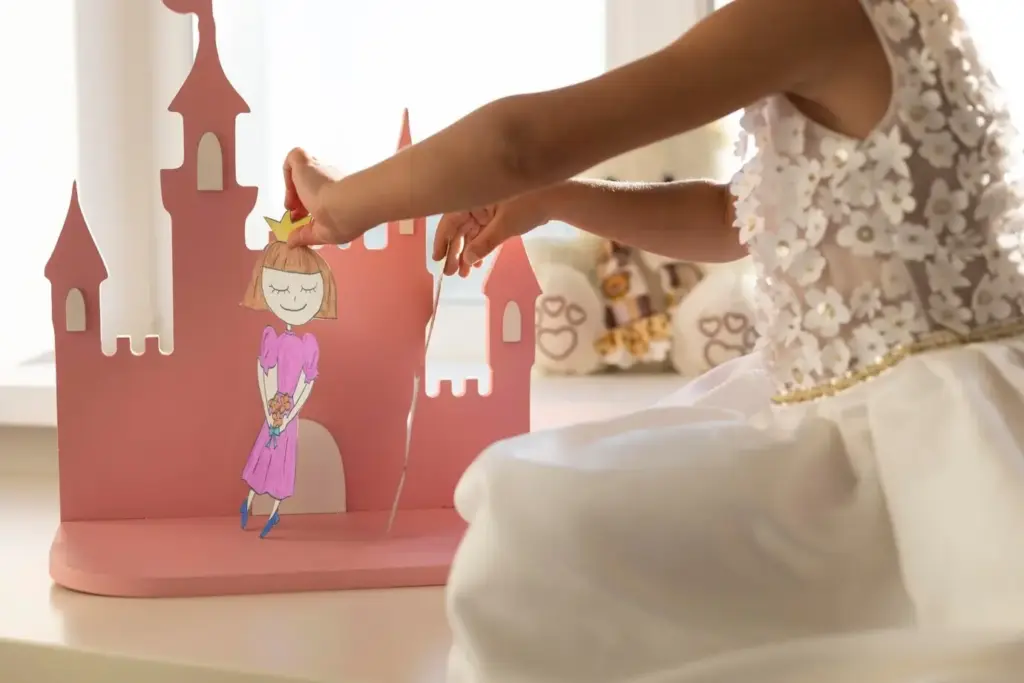
The proscenium frames everything, guiding sightlines and hiding mechanics that quietly do the heavy lifting. Layer arches, curtains, and side wings so they mask tabs while enhancing depth cues. Plan scene changes as mechanical phrases: one fold triggers another, and a sliding mask reorients attention. Build modular backdrops on removable spines, enabling quick swaps between acts without stressing the primary hinges.

Proscenium Frames and Forced Perspective

Narrowing arch openings and compressing floor grids create a convincing tunnel of space in only a few centimeters. Step side wings at decreasing intervals; paint cooler tones farther back to amplify distance. Hide structural gussets within pilasters. When the page opens, the audience perceives a grand stage, yet your supports remain camouflaged as ornament. Sketch perspective lines early to anchor every decision.

Swappable Backdrops and Modular Sets

Mount backdrops on slender spines that slip into discreet pockets behind the proscenium, letting you change from forest to palace in seconds. Keep attachment points standardized across productions. Use subtle tabs as registration keys so painted horizons align precisely. Print backup copies on lightweight stock for travel, and include a pocket envelope inside the cover that safely stores alternate scenes between performances.

Curtains, Shutters, and Gentle Transitions

Accordion curtains can rise as the book opens if tied to a short V-fold that pulls cords invisibly. For cinematic wipes, pair overlapping shutters with elastic paper hinges that ease motion. Calibrate stops so nothing snaps. During a festival demo, a curtain snag taught us to bevel inner edges and wax contact points lightly, ensuring every reveal feels intentional rather than accidental.

Linkages, Pull-Tabs, and Synchronization

Linkages translate small page motion into theatrical gestures that feel magical because they are precise. A four-bar can lift a balcony while a synchronized pull-tab rotates a moon, each constrained to miss the other by a millimeter. Stops, slots, and paper bearings tame friction. We will draft simple templates, mark neutral axes, and choreograph movements so beats land exactly on the downbeat.
Treat every joint as a paper rivet: pierce, reinforce with tiny washers of tape or vellum, and check for play. Keeping link lengths proportional prevents lockup near extremes. Offset pivots slightly to clear bulked creases. When scaled small, consider doubling links for stiffness while keeping weight balanced. A drop of graphite from a soft pencil often solves squeaks without messy residues.
Pull-tabs invite participation, so they must feel smooth, deliberate, and safe. Use long slots with rounded ends, back them with sleeves to protect art, and design mechanical stops before decoration. Mark pull resistance zones in testing, then relocate tabs away from weak fibers. Add tactile cues—tiny embosses or knots—so fingers find controls without looking, maintaining immersion and preventing accidental yanks.

Testing, Reliability, and Performance Readiness

A miniature theater must open hundreds of times, often by curious hands. Establish cycle tests with metronome pacing, watch for whitening along hinges, and note where tabs peel. Measure clearances at 30, 60, 90, and 120 degrees. Reinforce high-wear zones invisibly, log iteration numbers directly on prototypes, and retire fatigued pieces before they fail during a show. Reliability amplifies wonder.

Cycle Testing and Wear Patterns

Set a target like five hundred openings, then actually count, pausing every fifty cycles to inspect edges, joints, and alignment marks. Photograph trouble spots to compare progression. If fibers crack, rescore gently and laminate tissue. If props drift off-center, add a discrete guide tab. Keep failures on display; they teach faster than perfect models and encourage braver experiments next time.

Tolerances, Clearances, and Safety Margins

Paper swells and shrinks with humidity, so clearance that works today may bind tomorrow. Build in measurable gaps around arcs, test with a business card shim, and document the minimum safe radius for every moving edge. Overhangs love to hook; chamfer corners aggressively. When in doubt, shorten throw slightly and let theatrical lighting paint the drama rather than risking collisions inside the mechanism.

Repairability and Quick Fixes Mid-Show

Carry a micro kit: pre-cut tabs, neutral PVA, waxed paper, tweezers, and a mechanical pencil for instant graphite lubrication. If a linkage loosens, sleeve it with a tiny ring of paper. If a hinge tears, bridge it with tissue and re-score. Design access hatches in scenic walls so you can reach mechanisms without dismantling sets, keeping the performance flowing with grace.

Story, Spectacle, and Community

Mechanics serve emotion. When a stage unfolds cleanly, the audience leans forward and believes. Shape your engineering choices to support pacing, surprise, and clarity, and invite friends to critique rehearsals. Share your process, drafts, and happy accidents; others learn from your notebook margins. Subscribe for pattern releases, contribute photos of premieres, and suggest daring illusions we can prototype together next month.
Pufatuzenixovuxifo
Privacy Overview

This website uses cookies so that we can provide you with the best user experience possible. Cookie information is stored in your browser and performs functions such as recognising you when you return to our website and helping our team to understand which sections of the website you find most interesting and useful.